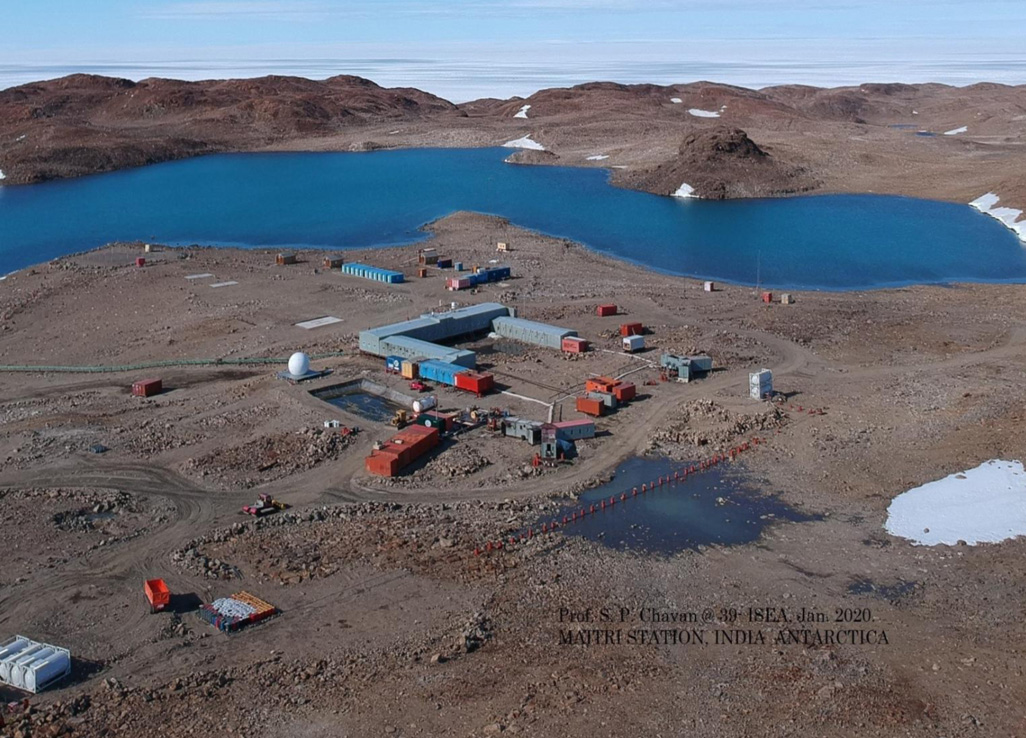
Abstract: India is set to embark on a new chapter in its Polar exploration journey with the construction of Maitri II. The Indian government plans to establish a new research station near the existing Maitri base, located in the Schirmacher Oasis region of East Antarctica, which was commissioned in 1989. The completion of the research station would be India's fourth research base. The new station is projected to be operational by January 2029. It will be established as a green research base with automated instruments and electricity generated from renewable energy sources, including solar and wind. Maitri II’s superior facilities, capable of accommodating approximately 90 scientists, are to be maintained by the National Centre for Polar and Ocean Research (NCPOR), reinforcing India's commitment to the Antarctic Treaty, scientific leadership, and active participation (Parashar, 2024) in global environmental monitoring and exploration, advancing polar and climate research.
Maritime chokepoints are vital points along shipping routes that facilitate the passage of substantial trade volumes. These chokepoints control the global essential supplies such as oil, gas, fertiliz...
What if India's pathway to net zero does not end at factories—but begins where terrestrial meets the coastal? As carbon emissions rise and climate risks intensify, the search for solutions has largely...
India is set to embark on a new chapter in its Polar exploration journey with the construction of Maitri II. The Indian government plans to establish a new research station near the existing Maitri ba...
The Deep Ocean Mission (DOM), approved by the Government of India in 2021 under the Ministry of Earth Sciences (MoES), represents a strategic step in realizing Sustainable Development Goal 14 (SDG 14:...