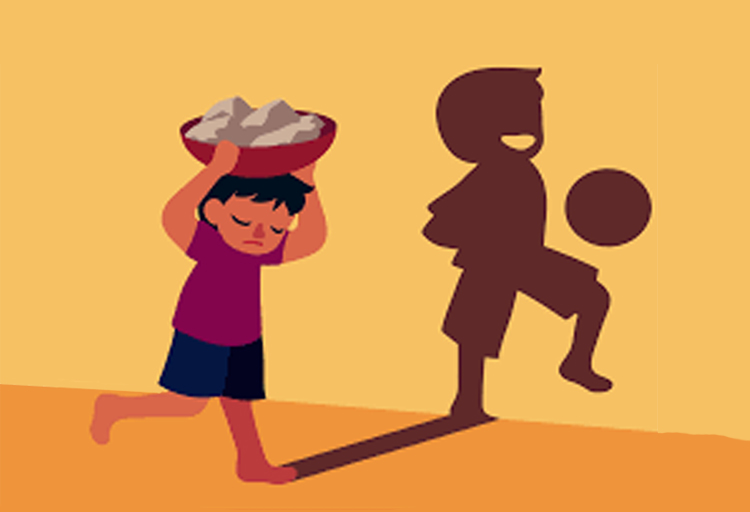
Abstract: Child labour continues to be a critical issue in India, affecting millions of children and undermining their rights, education, health, and well-being. Despite legal frameworks and policy initiatives aimed at eliminating it, socio-economic vulnerabilities, poverty, distress-driven migration, and weak enforcement mechanisms continue to sustain the practice, particularly in informal and hazardous sectors. Children from marginalised communities are disproportionately affected, with girls facing unique forms of exploitation. The lack of recent and reliable data – exacerbated by the delay of the national Census – hinders effective policy responses. This article examines distress-driven migrant child labour in India, highlights existing policy gaps, and underscores the urgent need for evidence-based and context-specific interventions.
The author is an Assistant Professor at the Indian Social Institute, New Delhi.
Glaw Lake was recently designated as Arunachal Pradesh’s First and India’s 101st Ramsar Site. It is located within the Kamlang Tiger Reserve and Wildlife Sanctuary. It hosts diverse flora and fauna sp...
Maritime chokepoints are vital points along shipping routes that facilitate the passage of substantial trade volumes. These chokepoints control the global essential supplies such as oil, gas, fertiliz...
What if India's pathway to net zero does not end at factories—but begins where terrestrial meets the coastal? As carbon emissions rise and climate risks intensify, the search for solutions has largely...
India is set to embark on a new chapter in its Polar exploration journey with the construction of Maitri II. The Indian government plans to establish a new research station near the existing Maitri ba...